Rufous Hummingbird — Northern California
Small, fiery, and impossibly brave, the Rufous hummingbird is a flash of copper and emerald that threads the gardens and chaparral of Northern California each year. At home here during migration and breeding seasons, these tiny dynamos pack a personality as vivid as their plumage.
Identification
Size: About 3–3.5 inches (7–9 cm) long.
Male: Brilliant orange-rust back and sides, iridescent orange to red throat (gorget), white underparts with rufous flanks.
Female/juvenile: More greenish upperparts, spotted or streaked throat with orange flecks, rufous tail edges.
Flight: Rapid wingbeats create a high, buzzing chirp; males often perform fearless, acrobatic chases.
Habitat & Where to See Them in Northern California
Preferred: Open woodlands, forest edges, mountain meadows, oak savannas, and suburban gardens.
Common locales: Coastal hills, the Sierra foothills, and montane zones during nesting; they also pass through urban and backyard habitats on migration.
Seasonal notes: Many pass through in spring and return south in late summer to fall. Some breeding populations stay in higher-elevation sites.
Behavior & Feeding
Diet: Nectar from tubular flowers (penstemon, columbine, currant, trumpet honeysuckle), plus small insects and spiders for protein.
Territory: Males are highly territorial around rich nectar sources and will chase larger birds and other hummingbirds away.
Nesting: Females build tiny cup nests of plant fibers and spider silk, camouflaged with lichen, usually placed on a slender branch.
This image is available for the following products: Metal Prints, Framed Prints

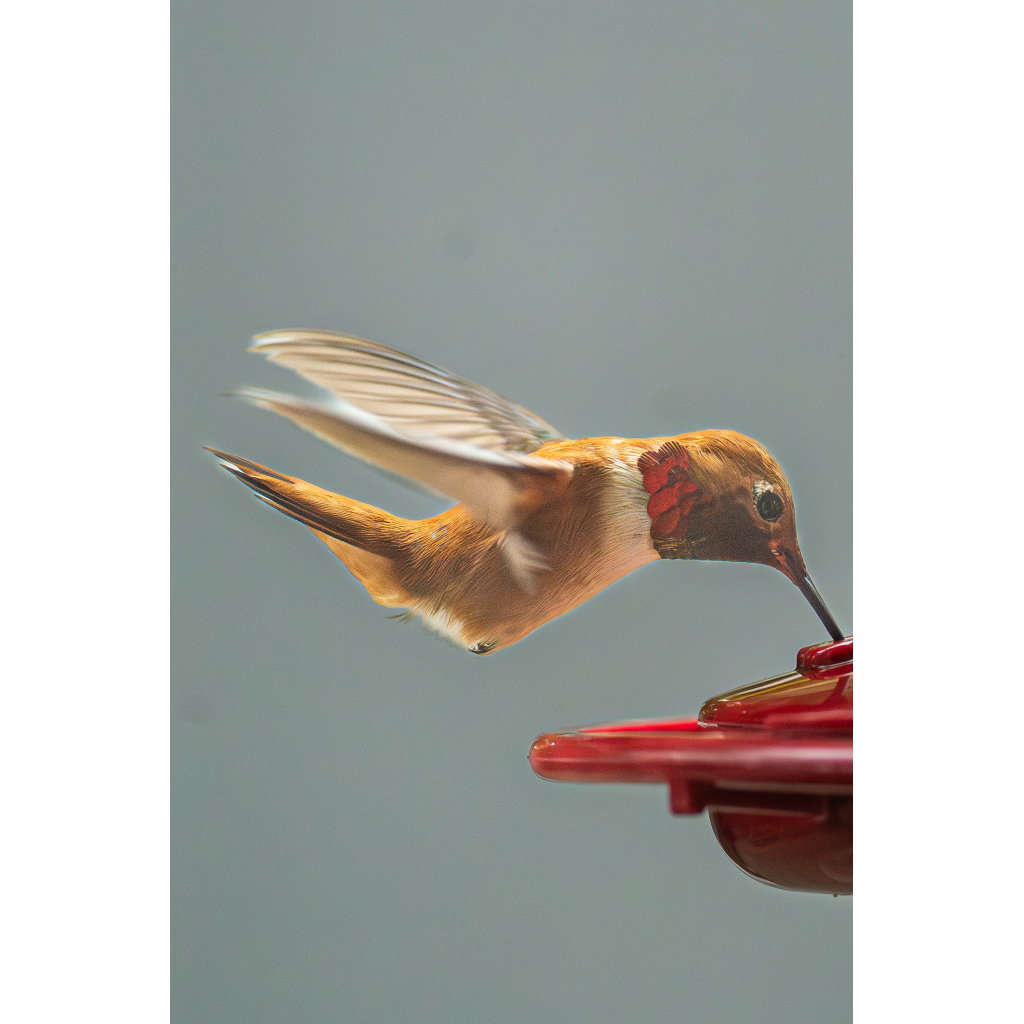 Image 1 of 6
 Image 2 of 6
 Image 3 of 6
 Image 4 of 6
 Image 5 of 6
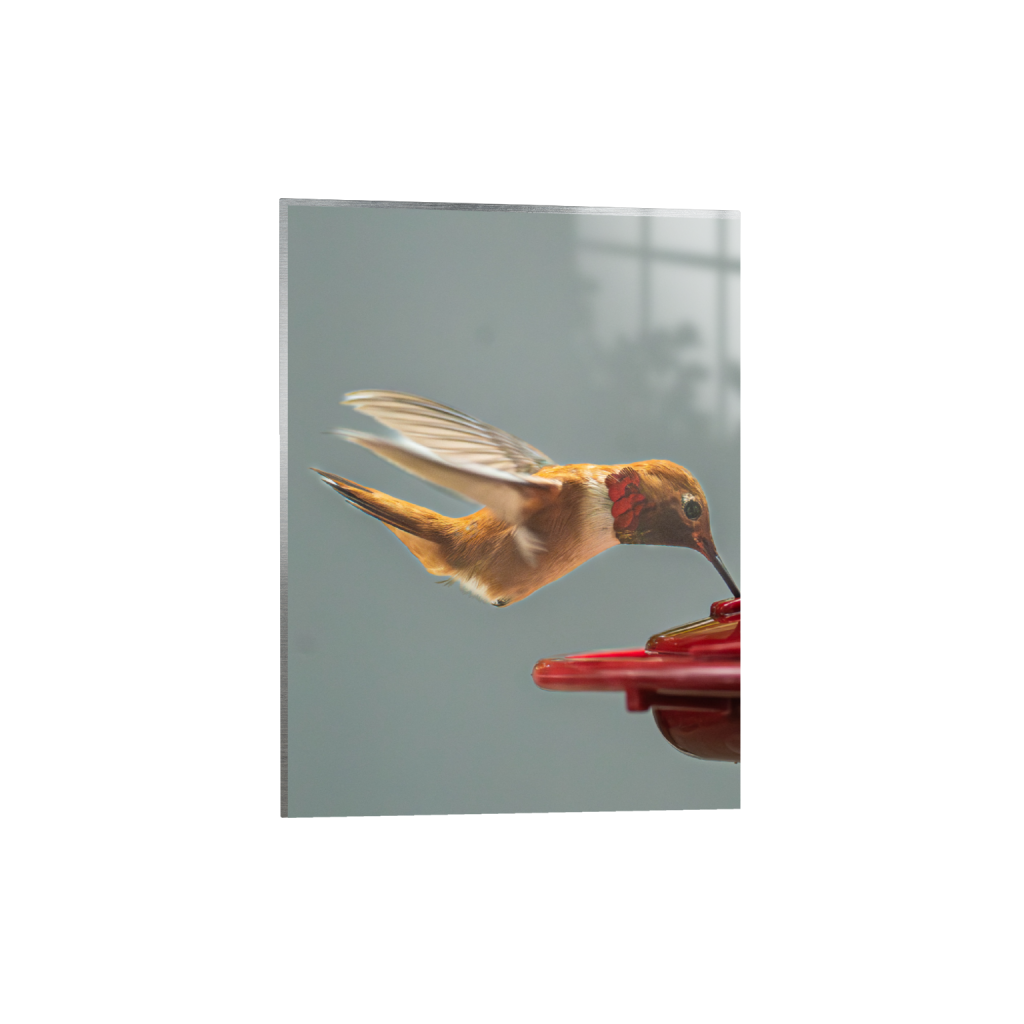 Image 6 of 6